


MindTrace Measures
the Mind
MindTrace supports clinical teams to measure and map neurocognitive function across the surgical care journey. This helps clinical teams protect language, memory, and movement.
Peace of Mind
“We have a unique opportunity to really carry this marriage of cognitive science and neurosurgery to the next level where we can perform very difficult operations easily by using the kind of technology that MindTrace is giving us.”
-Dr. Webster Pilcher, M.D., Ph.D. | Chairman of Neurosurgery, University of Rochester Medical Center
Advances in neurosurgery have transformed how clinicians visualize brain anatomy. Yet structured measurement of neurocognitive function remains variable across institutions. MindTrace brings greater consistency to how language, memory, and other cognitive abilities are assessed and documented during surgical care.
Structured Measurement of What Matters Most
“One of the major values of MindTrace is being able to use information to help make decisions in the face of uncertainty.”
- Dr. Tyler Schmidt, D.O. | Neurosurgeon, University of Rochester Medical Center
Language, memory, and other neurocognitive functions are central to activities of daily living and quality of life. Yet structured measurement of these abilities during neurosurgery remains variable across institutions.
MindTrace supports consistent administration and documentation of neurocognitive assessments before, during, and after complex brain procedures. By reinforcing structured workflows, MindTrace helps ensure that functional information is available to support interdisciplinary communication and patient-centered care.
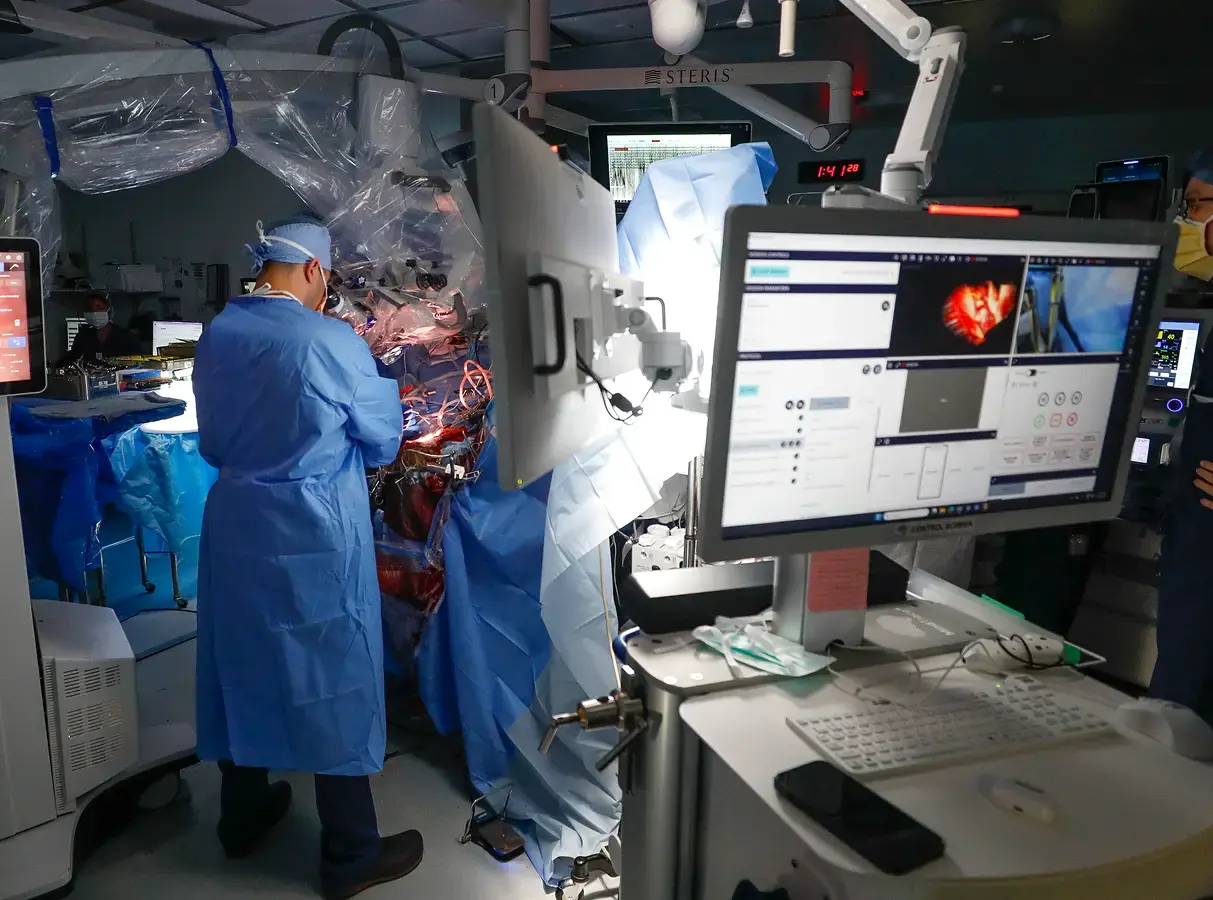
Photo Credit: Matt Wittmeyer

A Growing Network of Translational Neurosurgical Teams
MindTrace is a research tool used by clinical teams across the U.S. under Institutional Review Board oversight.
Who we serve
MindTrace supports structured neurocognitive assessment across neurosurgical care—serving clinical teams, researchers, institutions—and their patients.

Clinicians
MindTrace provides clinicians with a structured framework for administering and documenting neurocognitive assessments before, during, and after surgery. Designed to integrate into established clinic, operating room, and epilepsy monitoring workflows, the platform supports consistent data collection to help support clinical judgment and decision-making.

Hospitals and Healthcare Systems
MindTrace provides a structured platform for administering and documenting neurocognitive assessment across inpatient, peri-operative, intra-operative, and telehealth settings. The system supports program-level consistency while integrating into established functional brain mapping workflows and clinical infrastructure.

Patients and Caregivers
MindTrace helps care teams carefully measure and document abilities such as language, memory, and attention throughout the surgical journey. By supporting structured assessment, the platform helps to ensure that important information is available to guide thoughtful conversations about safety, recovery, and quality of life.

Researchers
MindTrace bridges clinical neurocognitive assessment and structured research data collection. The platform supports synchronized capture of task performance, response timing, stimulation events, and aligned surgical and neurophysiological information—enabling reproducible, multi-site translational research without requiring custom-built infrastructure.
Scientific Articles
MindTrace is a research tool used by clinical teams across the U.S. under Institutional Review Board oversight.

MindTrace
3518 Fifth Avenue, First Floor
Pittsburgh, Pennsylvania 15213
3518 Fifth Avenue, First Floor
Pittsburgh, Pennsylvania 15213
CONTACT

FOLLOW US
